Material reference

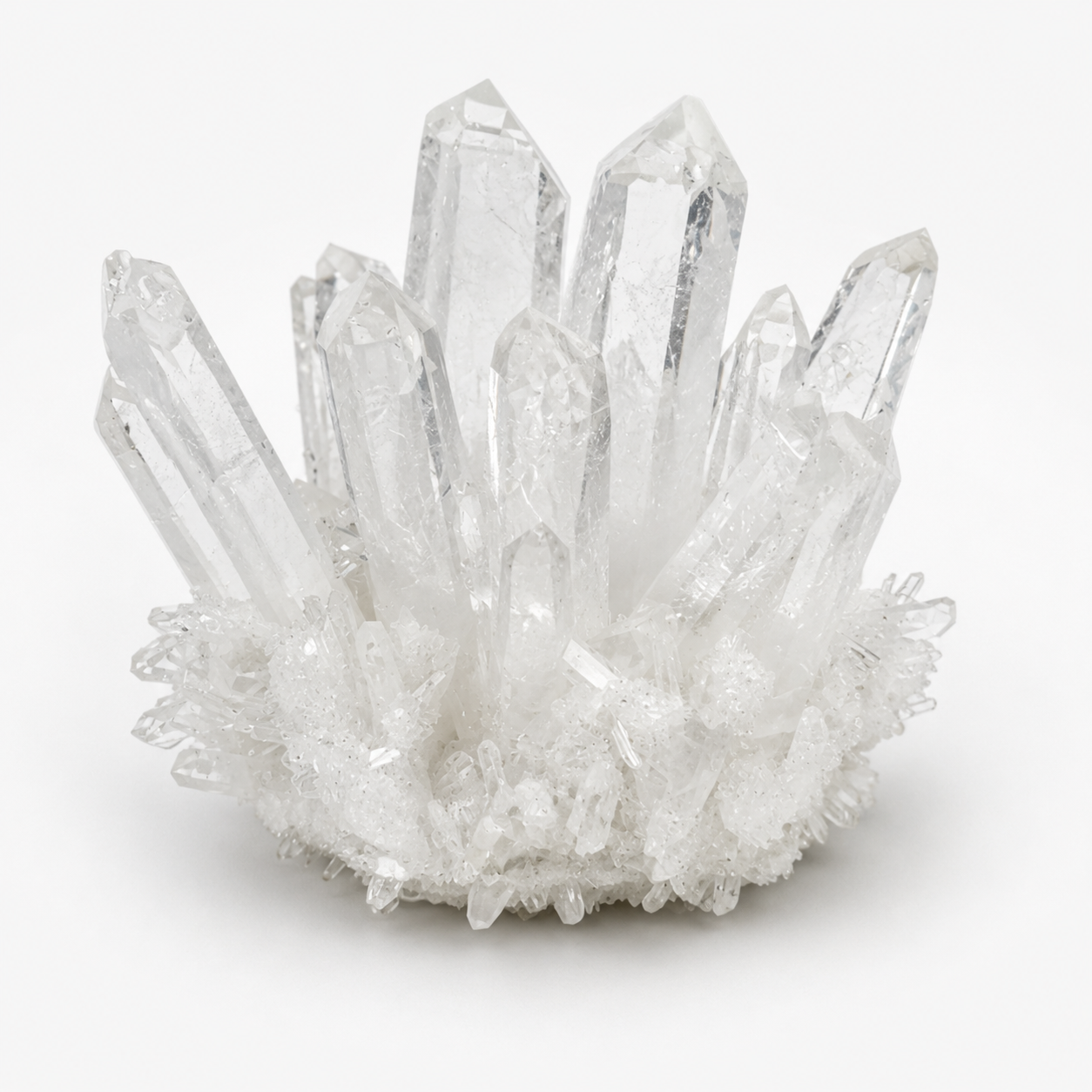
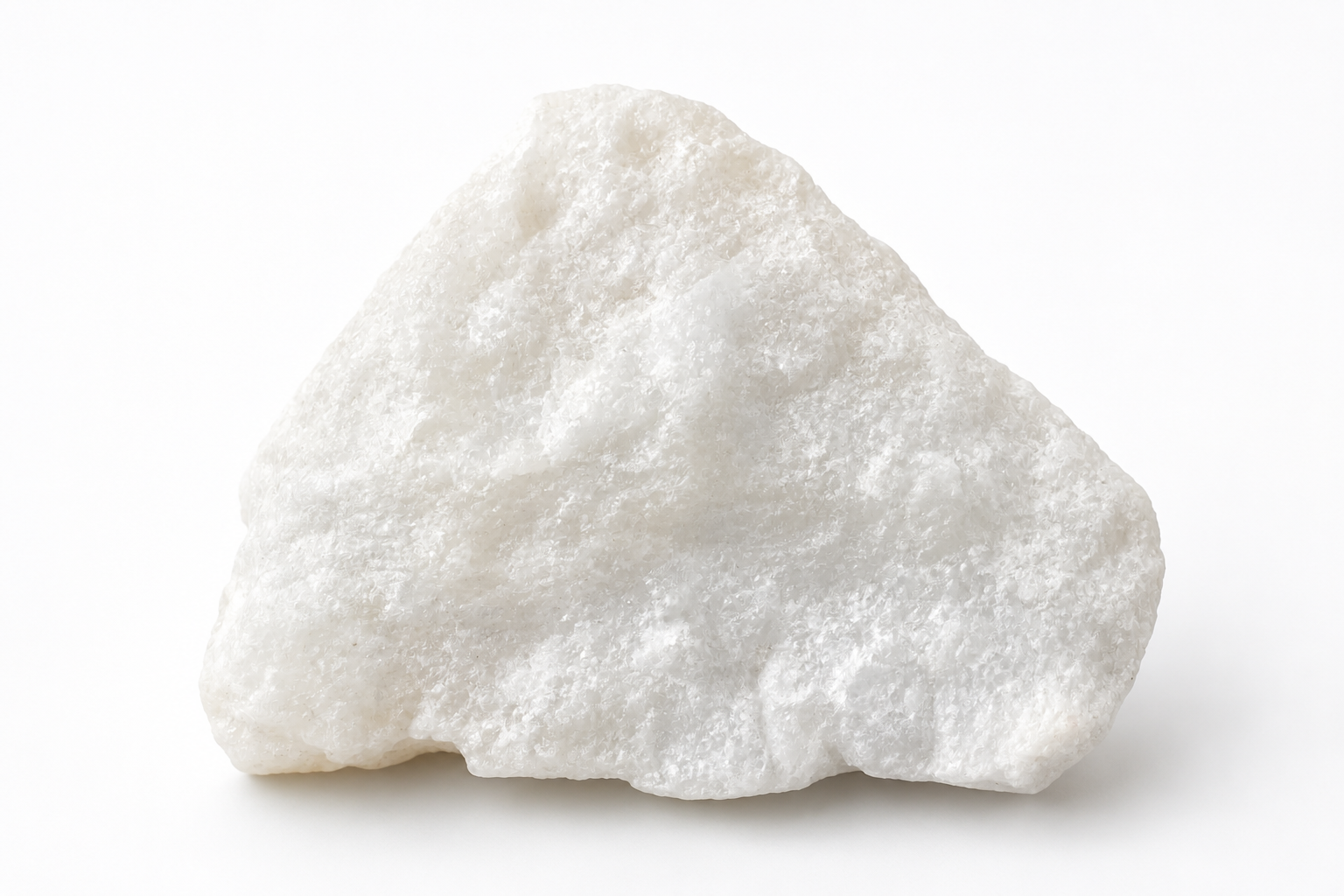
Quartz SiO₂

Chemically pure, optically clear, dimensionally stable. Fused quartz combines extreme hardness, low expansion and broad optical transmission from UV to IR.

Used for: lab tubes & crucibles · investment-casting shrouds · glass-manufacturing rollers · semiconductor wafer carriers · UV/IR optics

At a glance

Six critical properties

Max temp 1100 °C continuous
Density 2.2 g/cm³
Expansion 0.55 ×10⁻⁶/K
Purity Very high low contamination
Transmission UV → IR broad band
Electrical Excellent insulator
About this material

Everything you need to specify this material

Fused quartz — high-purity vitreous silica

Fused quartz is an industrial raw material used to make refractory shapes such as crucibles, trays, shrouds and rollers for several high-temperature thermal processes including steelmaking, investment casting and glass manufacture. Quartz refractory shapes have excellent thermal-shock resistance and are chemically inert to most components and compounds including almost all acids.
Grades comparison

Pick the right grade

Grade Purity Max temp Density Hardness Typical use Find products
Translucent fused silica High 1100 °C continuous 2.2 General industrial — heater tubes, refractory shapes → Find products
Transparent fused silica Very high (low OH) 1100 °C continuous 2.2 Optical, semiconductor and high-purity service → Find products

Click any column header to sort. Each grade links to its filtered product list.

Industries

Where this material is at work

FAQs

Frequent technical questions

What's the difference between quartz and fused silica?

Industrially, the terms are often used interchangeably. Strictly, natural quartz is crystalline SiO₂; fused quartz and fused silica are the amorphous glassy form produced by melting either natural quartz or synthetic silica. Anderman’s industrial quartz is the fused (vitreous) form.

Why does quartz devitrify?

At sustained temperatures above ~1100 °C, vitreous silica slowly converts back to crystalline cristobalite, becoming opaque and brittle. Keep continuous service below this point to maintain mechanical integrity.

Can quartz handle thermal shock?

Yes — the very low CTE (~0.55 × 10⁻⁶/K) means quartz tolerates rapid temperature changes that would crack most ceramics. Avoid prolonged service above 1100 °C to prevent devitrification.

Need help choosing a grade? Talk to our materials team.

Tell us your operating temperature, the chemistry it'll see and any mechanical loads. We'll specify a grade — or recommend an alternative material — and link you directly to matching products.